Best Hidden Placement Spots for Pepper Spray and a Lipstick Stun Gun Throughout the Home
- John Smith
- 3 days ago
- 6 min read

Article Brief: the best defensive spray in the world does nothing for you if it is buried in a junk drawer when you need it most. This guide walks through the smartest, most discreet spots around your home to keep a personal safety spray or a lipstick stun gun ready to grab, without turning your house into an armory.
Most people who look into home safety make the same mistake. They pick up a can of defensive spray, feel good about the purchase, then toss it in a drawer somewhere and forget about it. Fast forward six months and when an actual scare happens, like a strange knock at 2am or a dog barking at someone lurking near the porch, that spray is nowhere near reach. It is in the bedroom, and the noise is coming from the kitchen.
This is honestly one of the most overlooked parts of home safety planning.
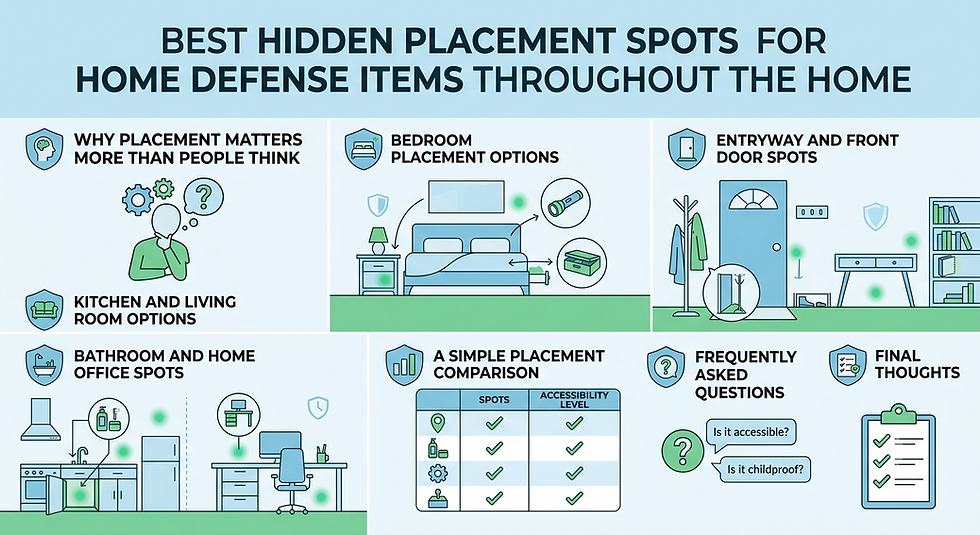
People spend time choosing the right product but almost no time thinking about where it lives day to day. A small item like a lipstick stun gun is popular precisely because it can sit in a purse, a nightstand, or a coat pocket without looking out of place, but even that kind of tool only helps if it is somewhere you would actually reach for in a hurry.
Below I will walk through the rooms and hiding spots that make the most sense, based on how people actually move through their homes during a stressful moment, not how we imagine we would move in a calm one.
Why Placement Matters More Than People Think
Here is the thing nobody tells you when you're shopping for personal safety tools. Under stress, your brain does not work like it does on a normal Tuesday afternoon. Fine motor skills drop off, tunnel vision kicks in, and you tend to move toward whatever is closest and most familiar rather than whatever is technically the best option in the house.
That means the safest spot for your defensive spray is not necessarily the most hidden one. It is the one that is:
Within a few steps of where you spend the most time
Fast to grab without fumbling through other stuff
Not visible to visitors, kids, or anyone who has no business finding it
Positioned near an entry point or a room where you would naturally retreat
Keeping those four things in mind changes the whole conversation about where to actually put things.
Bedroom Placement Options
The bedroom is where most nighttime scares originate, so this is priority one for a lot of families.
Nightstand drawer, but organized properly. A lot of people just drop a canister loose in the drawer. Instead, use a small drawer organizer or even a sock divided into sections so the spray sits in the same spot every single time. Muscle memory matters here.
Under the mattress edge, near the headboard. Slide a slim canister or a compact personal protection device into a fabric pouch and tuck it along the mattress seam closest to your side of the bed. It stays completely out of sight from anyone walking through the room.
Inside a decorative box on the dresser. Plenty of bedrooms already have a small jewelry box, a watch case, or a keepsake tin sitting out. Repurposing one of these for quick access items is about as discreet as it gets, and it does not raise any eyebrows if a guest happens to glance over.
Entryway and Front Door Spots
This is where a lipstick stun gun or a small can of spray genuinely earns its keep, since most unwanted visitors make first contact at the door.
A coat hook pouch, sewn or clipped to the inside of a jacket that hangs by the door
A shoe organizer pocket, the kind with dozens of small slots meant for keys and sunglasses
A shallow drawer in a console table, assuming the house has one near the entry
Inside a decorative bowl that already holds keys and mail, just tucked toward the back
The entryway spot only works if everyone in the household who should know about it actually knows about it. There is no point hiding something so well that you forget it yourself during an actual moment of panic.
Kitchen and Living Room Options
People spend a huge chunk of their waking hours in these two rooms, so it makes sense to have something within reach here too.
Inside a rarely used kitchen drawer, like the one holding extra takeout menus or spare batteries
Behind books on a living room shelf, stored in a small fabric pouch so it does not roll around
Inside a couch side pocket organizer, the fabric kind that slides between cushions
Tucked into a media console drawer near the remotes
A quick note on the kitchen specifically. Avoid placing anything near heat sources like the stove or oven, since some sprays are sensitive to extreme temperatures over long periods.
Bathroom and Home Office Spots
These two rooms get overlooked constantly, but they matter more than people assume.
The bathroom is a common spot people retreat to during a scare because it locks. A small pouch on the inside of a cabinet door, held with adhesive hooks, keeps a canister close without it sitting out on the counter.
A home office often has a desk drawer that barely gets used for anything other than old cables and pens. That drawer is a perfectly reasonable home for a compact device, especially if you work from home and spend hours there daily.
A Simple Placement Comparison
Room | Best Hidden Spot | Access Speed |
Bedroom | Mattress edge pouch | Very fast |
Entryway | Coat hook pouch | Fast |
Kitchen | Rarely used drawer | Moderate |
Living room | Couch side pocket | Fast |
Bathroom | Inside cabinet door | Moderate |
Home office | Desk drawer | Fast |
This is not a ranking of which room is most important, it is just a reference for how quickly you could realistically reach each spot from a standing position in that room.
Frequently Asked Questions
Is it legal to keep defensive spray at home? In the vast majority of states, yes, personal safety sprays are legal for adults to own and keep in a home. A handful of states or cities have specific restrictions on strength or size, so it is worth a quick check of your local laws before deciding where and how many you keep on hand.
How many hiding spots should a household actually have? Most safety consultants, myself included, suggest two to three spots rather than one. One central spot near where you sleep, one near the main entry, and one in a common living area covers most realistic scenarios without needing an item in every single room.
Do kids need to know these spots exist? If there are children in the home, this depends heavily on their age. For younger kids, it is usually safer to store items in spots that are simply inaccessible to them rather than hidden but reachable. For older teenagers, a short conversation about safe handling might make more sense than pure secrecy.
Does a lipstick stun gun expire like spray does? Spray formulas do have a shelf life and should be checked periodically, while non lethal safety tools like small stun style devices generally just need occasional battery or charge checks rather than replacement on a schedule.
What is the biggest mistake people make with placement? Picking a spot that feels clever but is actually slow to reach under stress. A hiding spot that takes fifteen seconds of digging defeats the whole purpose.
Final Thoughts
Choosing a personal safety spray or a small non lethal safety tool is really only step one. Step two, the part almost nobody talks about, is making sure it lives somewhere you would actually reach for without thinking twice. Spread a few thoughtful spots around the home rather than relying on just one, keep the household informed based on age and comfort level, and check expiration dates or battery levels every few months so nothing sits there quietly going unusable.
If you are still comparing options and want a broader look at what is out there, this rundown of some of the best self defense weapons currently available is a solid starting point for anyone building out a home safety plan from scratch.
Stay safe out there.
John Smith Safety Consultant, Austin TX


Comments